

Set amidst the sparkling Tyrrhenian Sea, Capri Island is a jewel of Italy, blending breathtaking natural beauty with rich history and a vibrant cultural scene. Whether you’re planning a quick day trip or a leisurely escape, this guide offers essential tips and insights to help you uncover the magic of this Mediterranean paradise.
Where is Capri Island?
Capri Island is located just off the south-west coast of Italy. It lies near the Gulf of Naples, directly south of the city of Naples and close to the Sorrentine Peninsula. Its dramatic cliffs, crystal-clear waters, and lush Mediterranean vegetation make it one of the most sought-after destinations in Italy.
Capri Island: quick history bites
The earliest settlers of Capri were Greek colonists in the 8th century BC, who left behind traces of their culture and architecture. The island later became part of the Roman Empire and rose to prominence during the reign of Emperor Augustus in the 1st century BC. His successor, Tiberius, solidified Capri’s fame by retreating here to rule the empire from Villa Jovis, leaving behind a legacy of imperial villas and fascinating legends.
Following the fall of the Roman Empire, Capri endured centuries of invasions, including raids by Saracen pirates. During this turbulent era, the local population built fortified settlements and sought refuge in the island’s rugged terrain, while churches and monasteries, such as the Certosa di San Giacomo, became focal points of community life.
Capri emerged from its medieval isolation as a small, self-sufficient community, relying on fishing and agriculture. However, the island remained relatively obscure until the 19th century, when it became a favorite destination for European artists, writers, and intellectuals, thanks to the Romantic movement, that celebrated Capri’s dramatic cliffs, caves, and idyllic charm solidifying its place in the travel diaries of the elite.

What to see and do in Capri Island
Capri Island may be small, but it’s brimming with incredible sights and experiences. From iconic landmarks like the Blue Grotto and the Faraglioni rocks to tranquil gardens and ancient ruins, it offers a rich tapestry of attractions for every type of traveler. Let’s dive into the best things to see and do, ensuring you don’t miss a single moment of its magic.
TO DO: spend the day exploring the island of Capri with a guided tour* of the ancient Capri and Anacapri. Discover the Blue Grotto with a rowboat trip and explore the magical Gardens of Augustus.
Piazza Umberto I, the “Piazzetta”
Piazza Umberto I, commonly referred to as La Piazzetta (aka “the small piazza”), is the social and cultural heart of Capri. Located at the edge of the historic center, this charming square was once a bustling market space, but today, it is a hub of local and international life, earning the nickname “the living room of the world.”
Historically, the square evolved from a fortified area during Greek and Roman times to a communal space in the medieval and modern eras and in the 20th century, thanks to the addition of iconic cafés like Gran Caffè Vuotto, became the island’s vibrant social center. From hosting lively markets to serving as a meeting spot for global travelers, the Piazzetta is a must-visit for anyone exploring Capri!
PRO TIP
Getting to the Piazzetta from Marina Grande, Capri’s main port, is easy and offers a couple of options depending on your preferences.
The quickest and most convenient way is to take the funicular, a cable car that connects Marina Grande directly to the Piazzetta in just a few minutes. Tickets can be purchased at the port, and the funicular runs frequently, especially during peak tourist season.
If you prefer a more scenic and leisurely approach, you can walk up to the Piazzetta. The route follows winding streets and stone staircases that provide charming glimpses of local life, historic buildings, and beautiful vistas. The walk takes about 15–20 minutes and is a wonderful way to immerse yourself in the island’s atmosphere, though it’s best attempted with comfortable shoes and in cooler parts of the day.

Punta Cannone viewpoint and the Faraglioni rocks
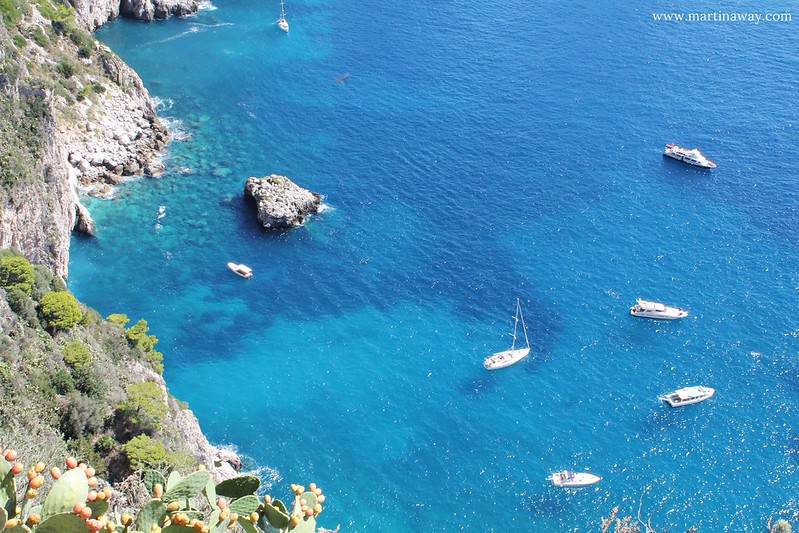
Punta Cannone is one of Capri’s most breathtaking viewpoints, offering a sweeping panorama of the island’s rugged beauty. Nestled high above the shimmering Tyrrhenian Sea, this scenic spot is perfect for capturing postcard-worthy views of the iconic Faraglioni rocks, towering limestone formations that rise dramatically from the turquoise waters and are among the most photographed landmarks of Capri.
The viewpoint is named after a cannon placed here in the 19th century and is accessible via a charming path lined with Mediterranean flora. From Punta Cannone, enjoy sweeping views of the Faraglioni, vibrant coastline, and lush greenery below. It’s a peaceful retreat that perfectly showcases Capri’s natural allure and is an ideal stop for photographers, nature lovers, and anyone seeking a tranquil escape.
The Gardens of Augustus
The Gardens of Augustus are a serene oasis on the island of Capri, offering a feast for the senses with their vibrant flowers, manicured terraces, and breathtaking views. Perched above the sea, these gardens were commissioned by Friedrich Alfred Krupp in the early 20th century and later named in honor of Emperor Augustus.
From here, visitors can admire the dramatic beauty of the Faraglioni rocks and the sinuous Via Krupp, which zigzags down the cliffs toward the sea. The gardens are a perfect place to relax, enjoy the scent of blooming flowers, and take in the stunning combination of natural and human-made beauty that defines Capri.


Archaeological sites: Villa Jovis and Palazzo a Mare
Perched atop Mount Tiberio, Villa Jovis is one of the largest and best-preserved Roman villas in Italy. Built in the 1st century AD, this sprawling complex served as Emperor Tiberius’s main residence during his rule. Its strategic location provided not only breathtaking views of the Bay of Naples but also a secluded haven for the emperor. As you explore the site, you’ll marvel at its sophisticated architecture, which included thermal baths, cisterns, and quarters for staff and guards.
Nearby is the famous Salto di Tiberio (Tiberius’s Leap), a dramatic cliff said to have been used by the emperor to dispose of those who displeased him. While the legend may be exaggerated, it adds a thrilling element to the site’s history and highlights Tiberius’s enigmatic reputation.
On the other hand, closer to the sea, Palazzo a Mare offers a glimpse into the leisure side of Roman imperial life. Though less extensive than Villa Jovis, this site was once a luxurious coastal villa featuring mosaics, marble decorations, and private docks. It reflects the emperor’s desire for proximity to the sea and his preference for tranquil settings.
Furthermore, in 2024 the new Archaeological Museum was inaugurated. Housed within the Quarto del Priore at the Charterhouse of San Giacomo, the museum focuses on the history of Capri during the time of Emperors Augustus and Tiberius. The exhibition spans eight rooms and showcases 120 artifacts and works of art, including marble sculptures, frescoes, ceramic and silverware, and ancient architectural elements.

The Casa Rossa (in Anacapri)
Capri Island is home to two municipalities: Capri and Anacapri. While Capri is known for its bustling Piazzetta and glamorous vibe, Anacapri offers a more tranquil and authentic experience, nestled higher up on the island. Among its unique attractions, together with the Blue Grotto, is the fascinating Casa Rossa.
The Casa Rossa (Red House) is a striking building named for the vivid red color of its exterior walls. It was constructed by American Colonel John Clay MacKowen between 1876 and 1899, incorporating the remnants of a 16th-century Aragonese Tower.
Local legends suggest that the tower, integrated into Casa Rossa, was once used by Anacapri’s residents to protect their women while the men worked in Naples. Though the truth remains uncertain, it adds a touch of intrigue to this vivid landmark. Today, the Casa Rossa hosts an exhibition showcasing 19th and 20th-century views of the island, offering visitors a glimpse into Capri’s artistic and historical heritage.
PRO TIP
For those seeking a blend of history and adventure, the Phoenician Steps (Scala Fenicia) offer a unique way to reach Anacapri. This ancient stone staircase, carved into the cliffside, ascends 921 steps from Marina Grande to Anacapri, rising 300 meters above sea level. Despite their name, the steps were likely built by Greek settlers and later restored by the Romans.. The climb takes about an hour.
The church of San Michele (in Anacapri)
Not far from the Casa Rossa is the Church of San Michele. While its exterior might not seem particularly remarkable, inside it holds a true work of art.
The church’s floor is covered with riggiole (hand-painted majolica tiles) depicting the expulsion of Adam and Eve from the Garden of Eden. This 1761 masterpiece is filled with flowers, plants, and both real and imaginary animals, such as unicorns. Today, the floor is kept clear to prevent damage and allow visitors to admire its intricate details.
A special highlight is the ability to view the artwork from above via a spiral staircase leading to the upper level. It may not be ideal for those with a fear of heights, but it certainly offers an incredible vantage point!


The Blue Grotto
The Blue Grotto (Grotta Azzurra, in Italian) is Capri Island’s most famous natural wonder, a magical sea cave that glows with an otherworldly blue light. This dazzling effect is caused by sunlight entering through an underwater opening, refracting and illuminating the cave’s interior in an ethereal glow.
To visit, guests board small rowboats at the entrance and pass through a narrow opening, ducking to enter the cave. The Blue Grotto has been enchanting visitors for centuries, from Roman emperors to modern-day travelers, and remains an unmissable highlight of any trip to Capri.
Tips & tricks to visit Capri Island
When planning your trip to Capri Island, there are a few practical tips and recommendations that can help you make the most of your visit. Whether you’re wondering how to get there or what you should bring home with you, I’ve got you covered with essential advice for a smooth and enjoyable trip.
How to get to Capri Island
Reaching Capri Island is straightforward and part of the adventure. The most common way is by ferry or hydrofoil from Naples, Sorrento, or Amalfi. Ferries operate regularly, with high-speed options taking around 20-50 minutes depending on your starting point. Once you arrive, the marina’s charm will welcome you, ready to start your Capri exploration.
TO DO: discover Capri with a local guide on a small-group tour from Naples* or Sorrento*. Visit the Blue Grotto, weather permitting, or enjoy a scenic boat tour, with free time to explore the charming Anacapri and more.
Where to stay in Capri Island
During my week in Campania, I chose to stay in Positano rather than Capri, opting for the charming Casa Teresa B&B*. Positano is conveniently located about halfway between Naples and the rest of the Amalfi Coast, making it a strategic base for exploring both areas. The B&B boasts an elegant style typical of the region, featuring colorful ceramic details and stunning views of the picturesque town.
If you’re planning a stay in Capri, you’ll find a wide range of accommodations to suit every need on major booking platforms, like Booking*, Expedia* or Hotels.com*.

Souvenirs from Capri Island
A beloved souvenir from Capri is the island’s famous bell, believed to bring good luck. According to legend, a young shepherd was saved by Saint Michael after losing his unique and beloved sheep, receiving a bell as a token of protection. Today, these bells are a cherished reminder of Capri’s charm, available in bright or pastel designs.

*Links marked with an asterisk are affiliate links. This means that if you choose to book or buy something using these links, I will earn a small commission. There is absolutely no extra cost to you, but your purchase helps support this blog and the effort that goes into creating each post. Thank you for your support!
